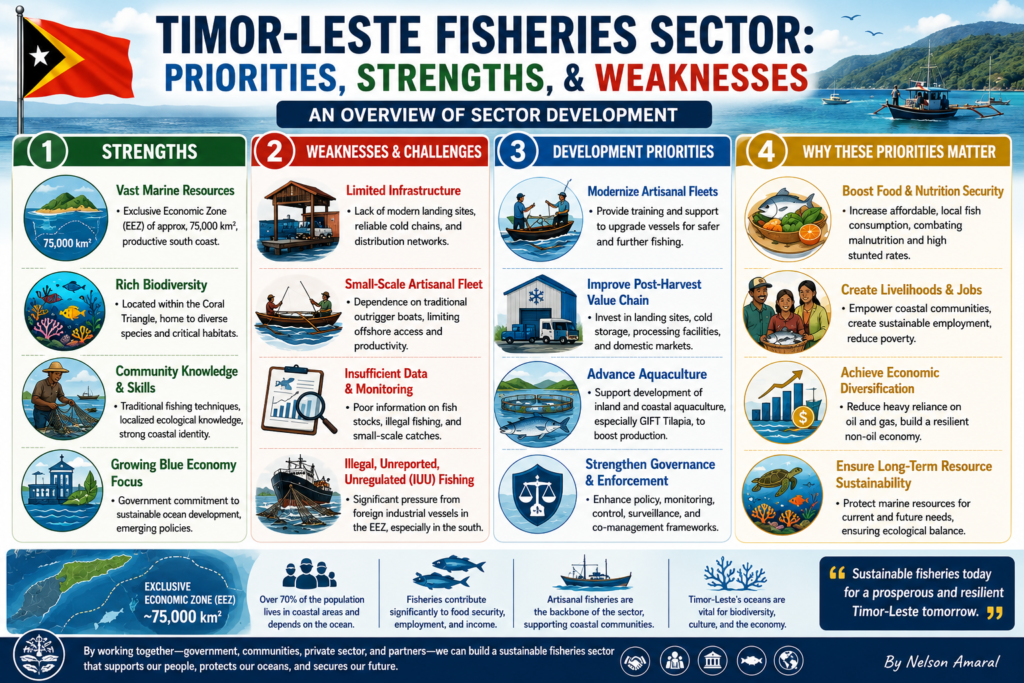
An Overview of Sector Development
By Nelson Amaral
Timor-Leste is a maritime nation blessed with vast ocean resources, rich marine biodiversity, and coastal communities whose livelihoods and cultural identity are deeply connected to the sea. The fisheries sector has enormous potential to contribute to food security, economic growth, employment, and sustainable development. However, realizing this potential requires addressing key challenges and investing in strategic priorities.
🌟 STRENGTHS
🌊 Vast Marine Resources
Timor-Leste possesses an Exclusive Economic Zone (EEZ) of approximately 75,000 km², with highly productive marine ecosystems, particularly along the south coast. These waters provide significant opportunities for sustainable fisheries development and blue economy growth.
🐠 Rich Biodiversity
Located within the Coral Triangle, one of the world’s most biodiverse marine regions, Timor-Leste is home to thousands of marine species, healthy coral reefs, mangrove forests, seagrass meadows, and critical habitats that support fisheries productivity.
🎣 Community Knowledge & Skills
For generations, coastal communities have practiced traditional fishing methods and developed extensive ecological knowledge of local marine environments. This cultural heritage remains a valuable foundation for sustainable fisheries management.
🔵 Growing Blue Economy Focus
The Government of Timor-Leste has increasingly recognized the importance of sustainable ocean development through emerging policies, strategic planning, and investments aimed at building a resilient blue economy.
⚠️ WEAKNESSES & CHALLENGES
🏗️ Limited Infrastructure
Many fishing communities continue to face inadequate fisheries infrastructure, including limited landing sites, insufficient cold storage facilities, weak transportation systems, and underdeveloped market networks.
🚣 Small-Scale Artisanal Fleet
Most fishers rely on traditional outrigger boats with limited capacity, restricting their ability to safely access offshore fishing grounds and improve productivity.
📊 Insufficient Data & Monitoring
Reliable information on fish stocks, catch volumes, fishing effort, and ecosystem health remains limited. Strengthening fisheries data systems is essential for evidence-based decision-making.
🚨 Illegal, Unreported, and Unregulated (IUU) Fishing
Foreign industrial fishing vessels operating illegally within Timor-Leste’s waters continue to threaten marine resources, undermine national revenues, and impact local fishers’ livelihoods.
🚀 DEVELOPMENT PRIORITIES
⛵ Modernize Artisanal Fleets
Investing in safer vessels, improved fishing equipment, navigation systems, and fisher training can enhance productivity while improving safety at sea.
❄️ Improve Post-Harvest Value Chains
Strengthening fisheries infrastructure through landing sites, cold storage facilities, fish processing centers, and domestic market development will reduce post-harvest losses and increase income opportunities.
🐟 Advance Aquaculture Development
Expanding inland and coastal aquaculture, particularly GIFT Tilapia production, can increase domestic fish supply, create jobs, and reduce pressure on wild fish stocks.
⚖️ Strengthen Governance & Enforcement
Improving fisheries policies, monitoring, control and surveillance systems, and community-based co-management approaches will help protect marine resources and combat IUU fishing.
💡 WHY THESE PRIORITIES MATTER
🍽️ Boost Food & Nutrition Security
Increasing access to affordable and nutritious fish can help address malnutrition and high stunting rates while improving public health outcomes.
👨👩👧👦 Create Livelihoods & Jobs
A stronger fisheries sector can generate employment opportunities throughout the value chain, empowering coastal communities and contributing to poverty reduction.
📈 Achieve Economic Diversification
Developing fisheries and aquaculture can reduce dependence on oil and gas revenues while supporting a more resilient and diversified national economy.
🌱 Ensure Long-Term Resource Sustainability
Sustainable management of fisheries resources is critical to maintaining ecosystem health and ensuring future generations continue to benefit from Timor-Leste’s rich marine heritage.
🌊 The future of Timor-Leste’s fisheries sector lies in balancing economic development, social well-being, and environmental sustainability. Through strategic investments, stronger governance, and community participation, fisheries can become a powerful driver of national development and blue economy growth.
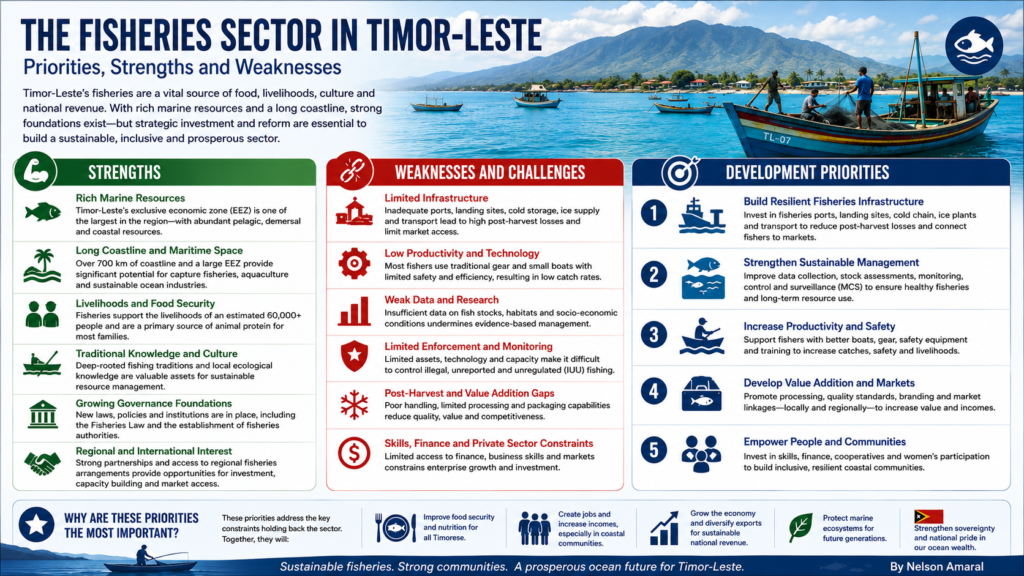
#TimorLeste #Fisheries #BlueEconomy #MarineConservation #SustainableFisheries #OceanAction #FoodSecurity #Aquaculture #CoastalCommunities #CoralTriangle #IUUFishing #SustainableDevelopment #OceanHealth #MarineBiodiversity